▢ Case study · 2026
PinPoint
An embeddable feedback platform. Paste one snippet, then design, target, publish and roll back bug-report, NPS and survey widgets from a dashboard, with reports filed straight into GitHub, Linear or Slack.
- Role
- Solo full-stack developer
- Year
- 2026
- Timeline
- Sep to Oct 2026
- Built with
- TypeScriptPreactNext.jsFastifyPostgreSQLPrismaRedisBullMQZodCloudflare WorkersCloudflare KVCloudflare R2TurborepoPlaywrightVitest
01
The problem
Most user feedback never reaches the developer. Users who hit a bug usually leave, and the ones who do report it send something like “the button doesn’t work,” with no page, browser or error attached.
Existing feedback widgets have their own problems. Changing a widget often means redeploying your site. They can break the host page’s styles or slow it down. Reports then sit in yet another inbox instead of the issue tracker your team already uses.
I wanted a widget you install once, with one snippet, and never touch again. Every report should arrive with full context and land directly in GitHub or Linear.
02
What he built
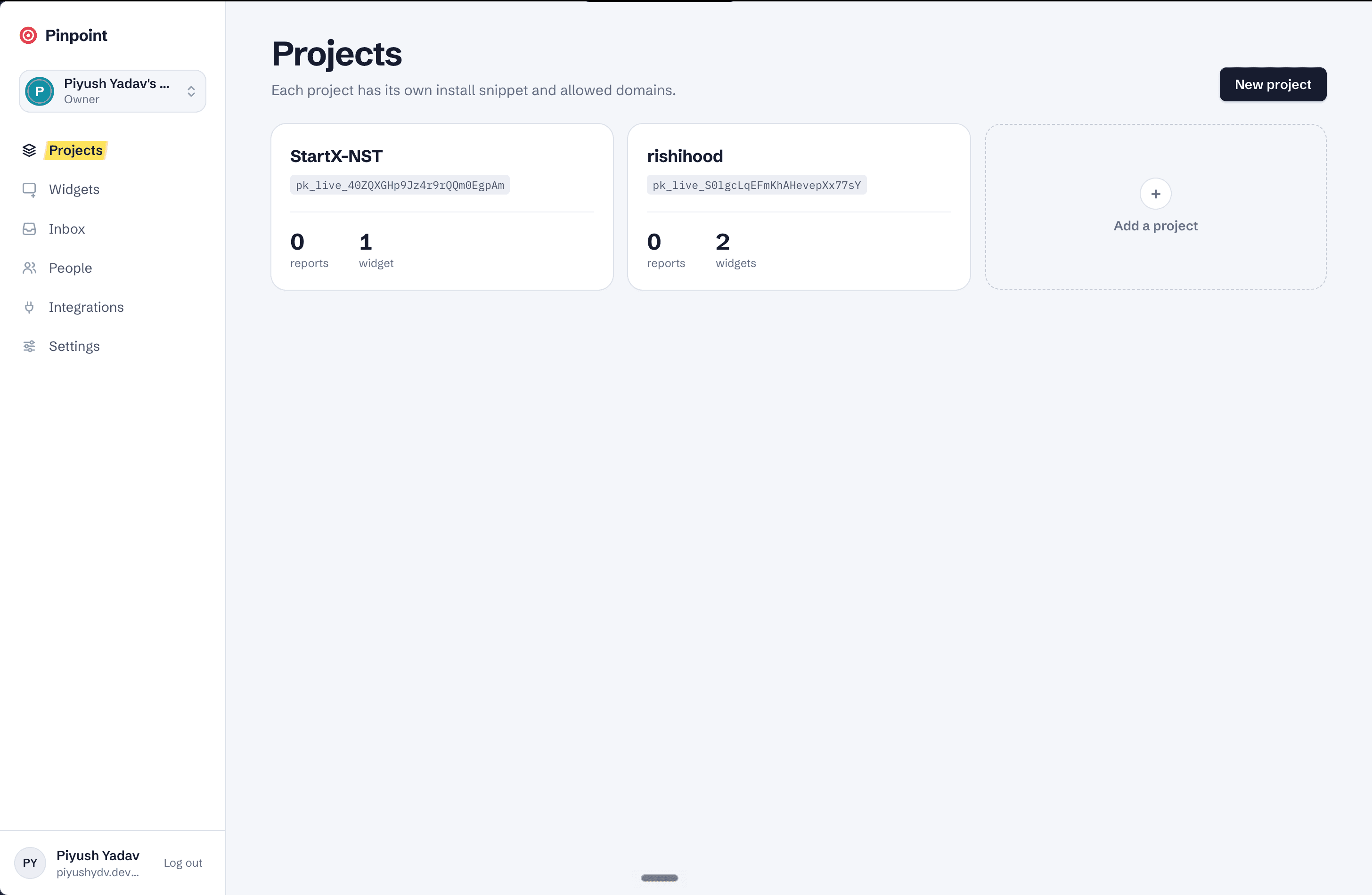
PinPoint is an embeddable feedback platform with three parts: a dashboard, an edge-delivered widget, and an API that files reports into your tools.
Widgets
Six templates: bug report, feature request (with a public upvote board), NPS, CSAT, general feedback and custom forms
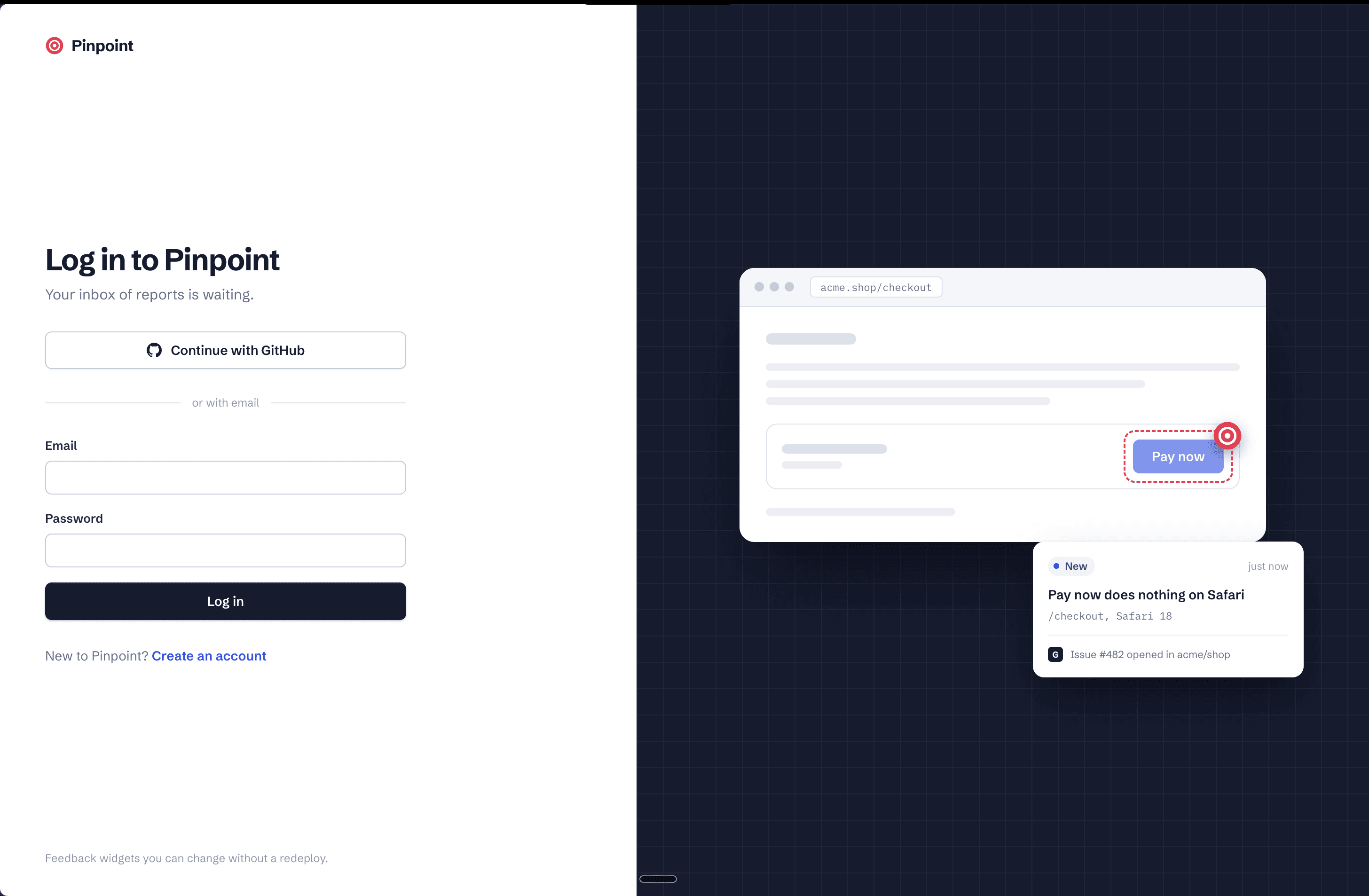
Bug reports with annotated screenshots, where users can draw, highlight and redact before sending
Every report arrives with the page, browser, console errors and failed network requests attached
Targeting, triggers, themes and multiple languages, all set from the dashboard
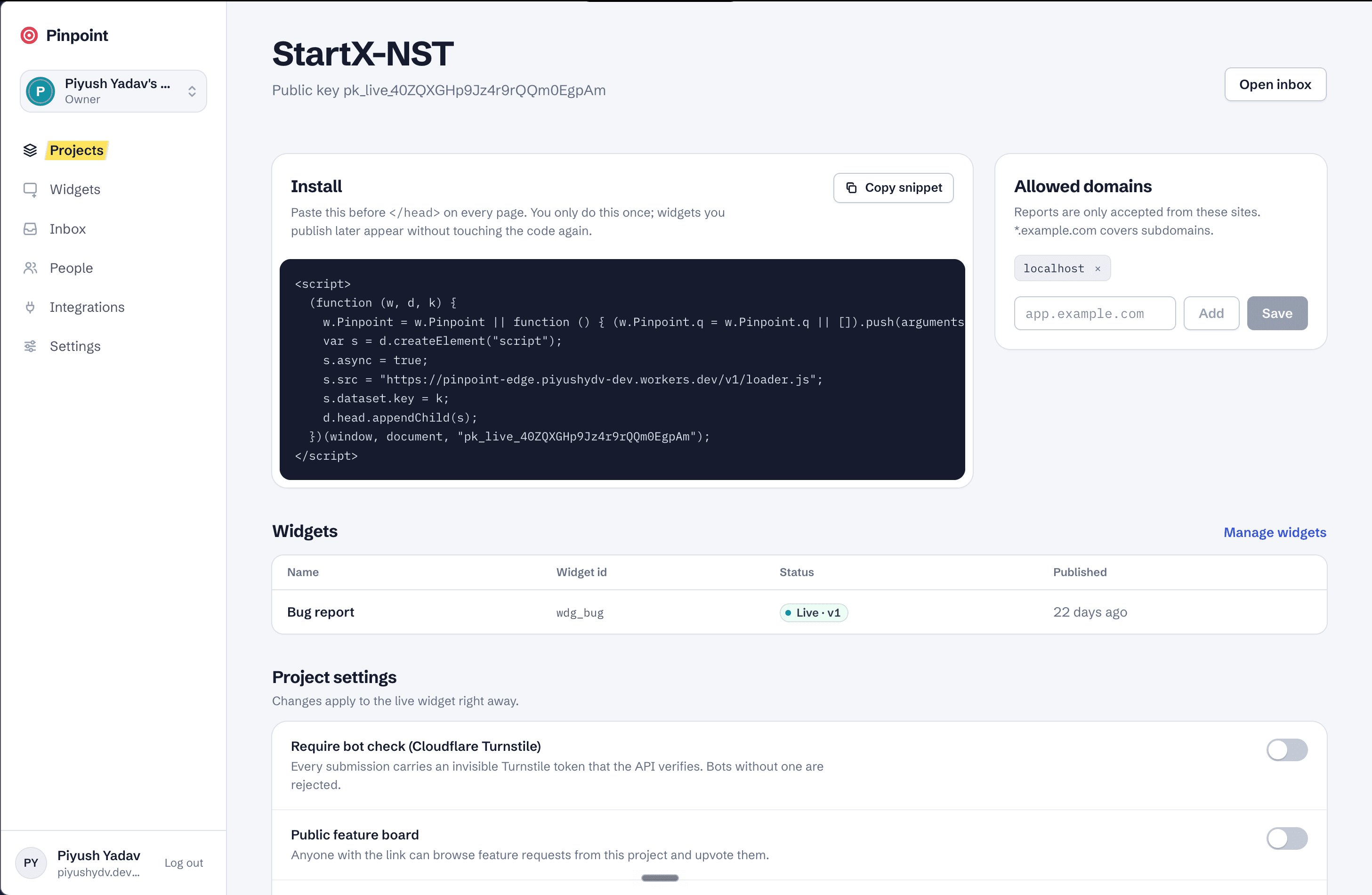
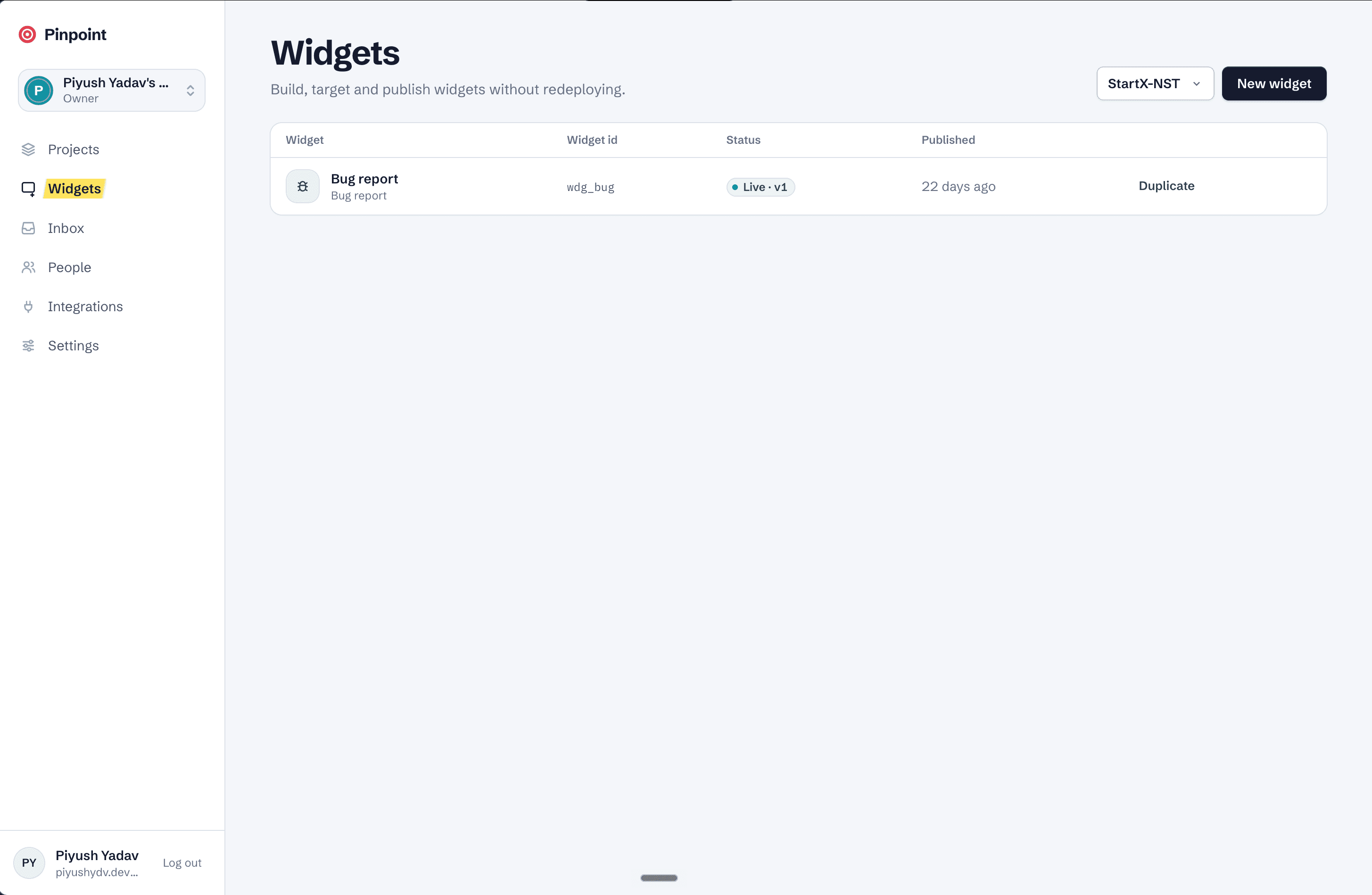
Publishing without redeploys. Every widget change creates an immutable version. Publishing or rolling back just moves a pointer, and the new config reaches visitors through Cloudflare’s edge.
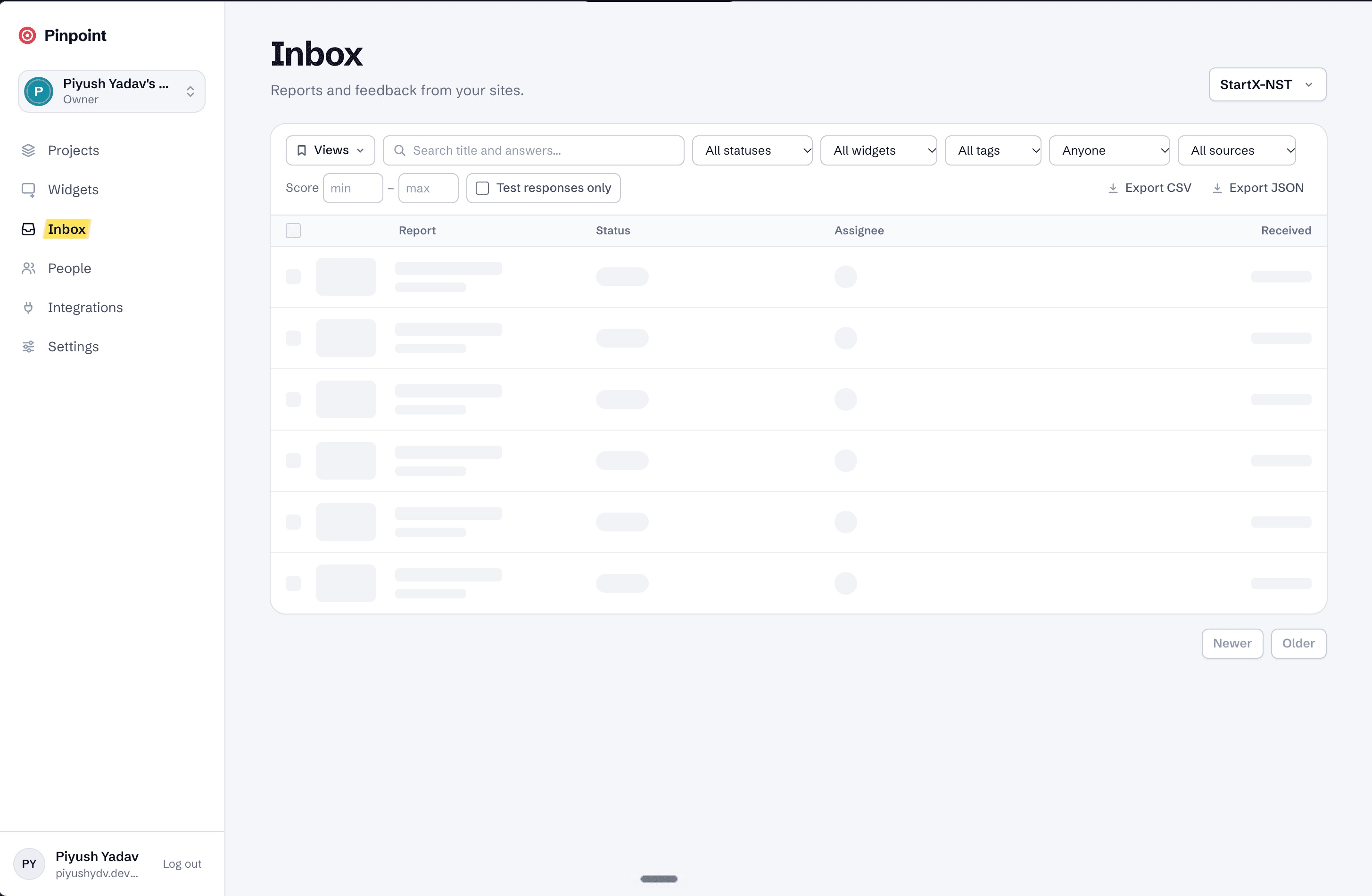
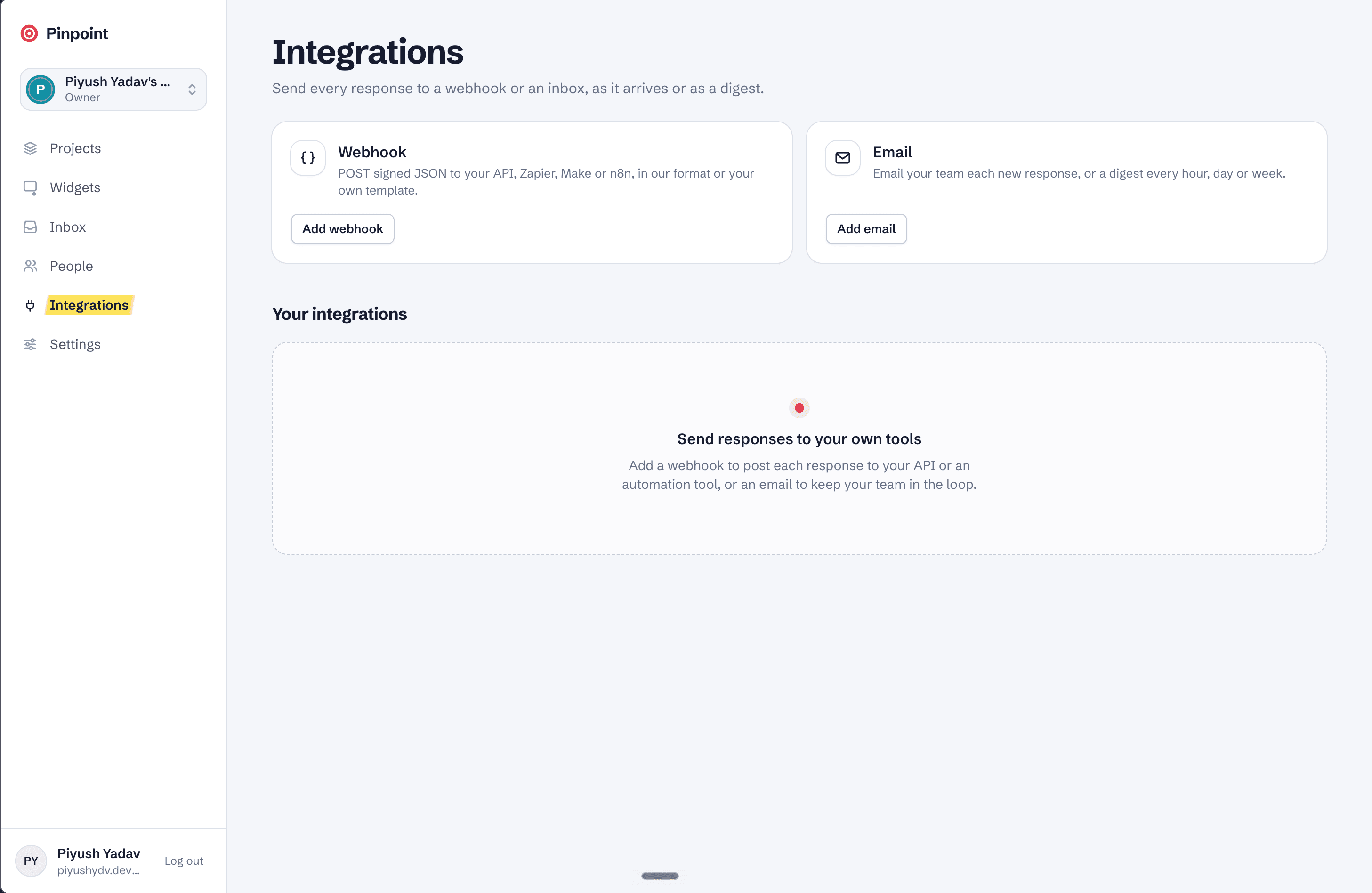
Integrations. Reports are filed into GitHub (as a GitHub App), Linear, Slack, Discord, email or a signed webhook. When the issue is closed, its status syncs back, and the reporter can get a “your bug was fixed” email.
Architecture
Dashboard: Next.js on Vercel
API: Fastify on Render, with Neon Postgres and Prisma
Edge: a Cloudflare Worker serving configs from KV, with screenshots stored in R2
Queue: BullMQ on Redis, with one queue per provider and automatic retries
Widget: a 1 KB loader that downloads the Preact engine only if a widget targets the current page
Framework wrappers: React, Vue and Svelte
Everything runs on free tiers.
03
The hard parts
Never breaking the host page. A widget runs on someone else’s website, with styles and scripts I don’t control. The engine renders inside a closed Shadow DOM in the browser’s top layer, so host styles can’t leak in and the widget’s styles can’t leak out. I built 11 deliberately hostile test pages and ran them across Chromium, WebKit, Firefox and mobile emulators. The result was zero style leaks and zero host errors.
Staying tiny. The loader is 1.03 KB gzipped and the engine is 20.3 KB. The screenshot module and annotation editor are loaded lazily only when a user needs them. Size limits are enforced in CI and fail the build if exceeded. On a test page, Lighthouse scores didn’t drop at all after installing the widget.
Screenshots without browser permission. Browsers don’t let a page take a real screenshot without asking. So I built a DOM-to-canvas capture module. Across 20 cloned real-world pages, it succeeded every time, with at most 2.3% pixel difference from a real screenshot and a median capture time of 12 ms. Redactions are baked into the image before upload, so hidden data never leaves the browser.
Untrusted input from the open web. Anyone can send a report from any page, so every report is checked:
a valid project key and an allowed origin
rate limits and a Turnstile bot check
schema validation
Incoming GitHub and Linear webhooks are verified with HMAC and deduplicated.
One source of truth. Widget configs, templates, validation and translations all live in one shared Zod schema package used by both the dashboard and the engine. All six templates are pure configuration, with no template-specific code in the engine.
Accessibility. Widgets meet WCAG 2.1 AA with zero axe violations in light and dark modes. They have full keyboard navigation and a focus trap.
04
How it turned out
PinPoint is live at pinpoint.piyushydv.com (opens in a new tab). Every target from the product spec is backed by a check that runs in CI or a script:
1.03 KB loader and 20.3 KB engine (gzipped), both under their size budgets
Zero Lighthouse impact on the host page
Publish and rollback go live in under a second locally (bounded by edge propagation in production)
From sign-up to first report in about 2 seconds in a scripted end-to-end test
Report to GitHub issue at p95 173 ms
Test coverage: schema 100%, engine 98.5%, API 97.4%
479 unit and integration tests plus 53 browser tests
This project taught me how hard it is to run code on websites I don’t own, and that every claim in a spec should be backed by a test.
Gallery · 7